Showing posts with label guide. Show all posts

How to tie a Palolo Worm Fly with a Weedguard


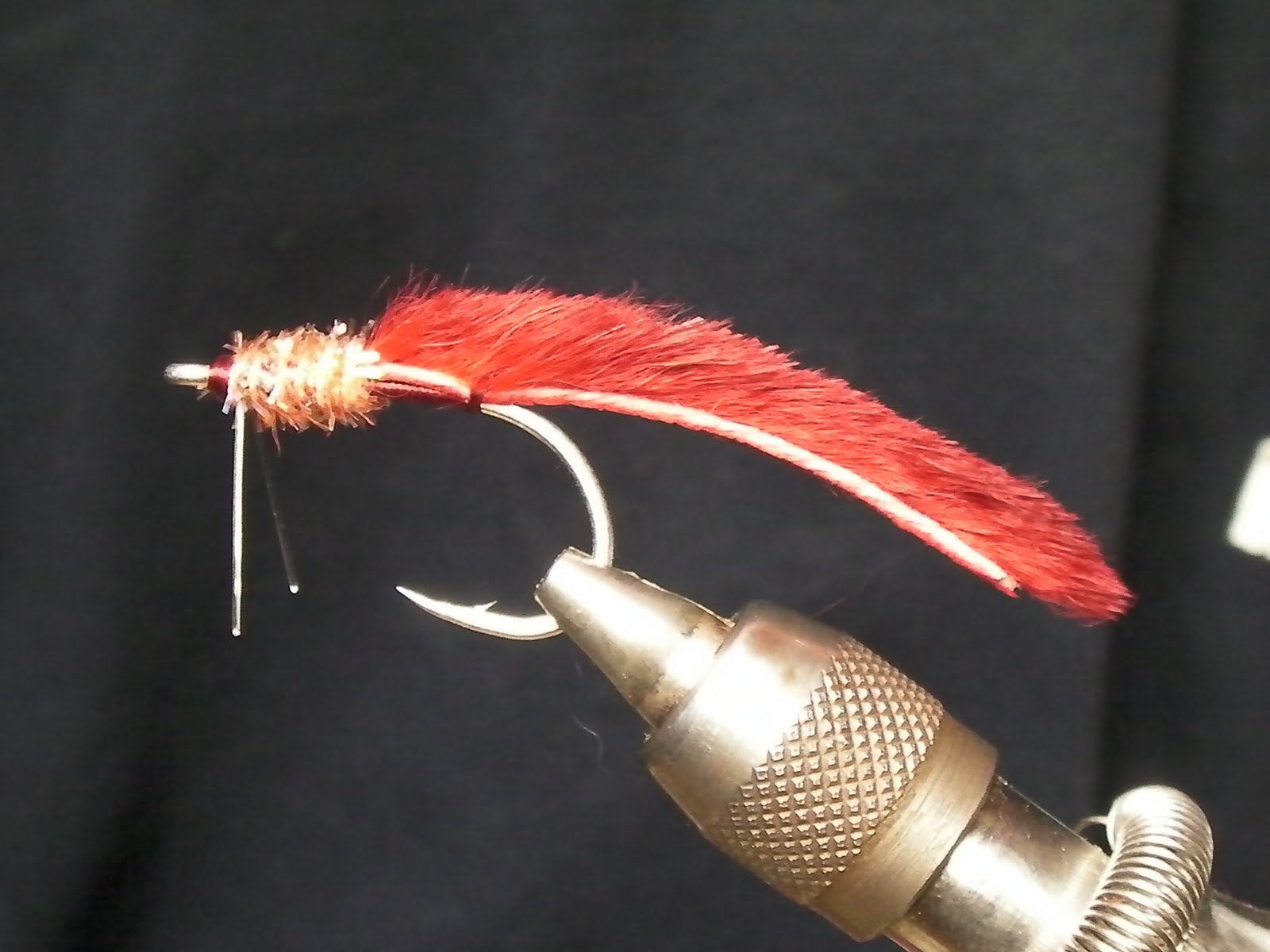
The annual Palolo Worm Hatch in the Florida Keys is a true spectacle of Mother Nature. Thousands of tarpon collect for a gorging feast during the short time they hatch.  This little Palolo Worm Fly is one of the best ways I have learned to match the hatch.

Click here to learn a little more about the Palolo Worm


Hand Printed Long Sleeve 
Fishing Shirts For Sale, $25


RipLips.com

~Click on any image to enlarge~

Materials List:

Tarpon fishing demands using a strong hook. I prefer a Gamakatsu SL12S size 1/0 for all of my tarpon fishing.


This Worm Pattern is tied with red rabbit strips that are clipped. I have experimented with a few other colors and had pretty good success.
Click here to buy Red Rabbit Strips


I find that I catch more fish during the worm hatch when I use a weed guard on my Palolo Worm Flies. I simply use 15 lb. or 20 lb. flouro or mono for my weed guard.


~Click on any image to enlarge~


Step By Step: How to tie a Palolo Worm Fly


Start a hook with red thread


Add a strip of rabbit for the tail


Tie in crystal chenille


Add a 20 lb. flourocarbon weedguard
and whip finish


Trim and complete


Palolo Worm Fly

RipLips.com


Capt Matt is a fly fishing guide during the Spring Tarpon Migration in the Lower Keys. If you would like to set up a Tarpon Fishing Charter this next spring, go to http://riplips.com/floridaguidepage.html


"How to tie a
Palolo Worm with a  Weed Guard"
by Capt Matt Thomas

How to tie a Colorado River Special


The Colorado River Special is a Bead Head Nymph designed to catch big trout in the Colorado River.  The bright tail and copper bead prove to be irresistible to the brown trout and rainbow trout living behind deep rocks. I tie this fly with quite a bit of weight and I often reduce the size of my hook as the season turns.

(Click here to learn a little about the Colorado River)


Watch how to tie this fly:


~Click on any image to enlarge~

Materials List:

When I tie flies to use on the Colorado River, I use strong hooks, the fish are big and will bend out inferior hooks in a matter of moments. For this Colorado River Special, I used a Tiemco 3761 Size 10


 I also use a bead on this nymph pattern.  I prefer gold or copper beads
that are matched to the hook, like these in the picture above.
 

Strong thread is a must for this bead head nymph, a tightly 
wrapped fly will last for quite some time.  I used brown in the video.


I also use Copper wire for the rib.  This also helps keep the fly 
durable and i think adds a little to the way a fly looks.


The tail of a Colorado River Special is tied with brightly colored red or orange 
material.  I have used both marabou and rabbit and both work just fine.


The body of this fly is wrapped with a couple of peacock hurls.
I hunt for peacock hurls that are "full" looking.
Click here to buy Full Looking Peacock Hurl


The collar of this killer little bead head nymph is tied with brown saddle hackle.  I like to use hackles that are stiff and stand right out.  In a way I believe that this hackle acts as a weed guard that keeps my fly from snagging as often.
Click here to buy good Brown Saddle Hackles


~Click on any image to enlarge~


Step By Step: How to tie a Colorado River Special


Place a bead on a hook


Wrap the hook with lead wire


Now start the thread


Tie in a tail


Add a copper rib


Tie in peacock hurl and wrap it forward


And wrap the copper rib forward in the other direction


Tie in a stout saddle hackle, whip finish, and complete the fly


Capt Matt Guides from a drift boat on the Colorado River West of Glenwood Springs, CO. The Colorado is a true fly fishing experience and big fish are caught every day. If you would like to book a top fly fishing guide for the Colorado River, go to http://riplips.com/coloradopage.html


"How to tie a
Colorado River Special"
by Capt. Matt Thomas

How To Tie A Blue Crab Fly


This particular Crab Pattern is made to look like a Blue Crab. Blue Crabs are an irresistible bite to many of my favorite fish. Permit, Bonefish, Redfish, Tarpon... I could name more, but the fact remains, blue crabs catch fish. This blue crab fly can be tied big or small, weighted heavily or not, the hardest part is getting it right to the fish, and when you do, hang on!


~ Click any image to enlarge ~


Materials List:


I like to use a Gamakatsu SL12S size 2 for my crab flies.  This hook is
strong and very sticky.  Most appropriately sized saltwater hooks will do.

This particular crab pattern is tied with tan thread.  I suggest using 
 something light colored that you can change with a marker later.
Click here to buy Fly Tying Thread


Most crab fly patterns use weighed eyes to get down to the fish right away.
This crab pattern is tied with medium weight eyes.
Click here to buy Weighted Eyes


This fly calls for a hackle feather tail.  I use two grizzly hackles
splayed out "Keys Style" for the tail of the fly.
Click to buy Crab Tying Feathers


I used dyed marabou in the tail of the fly as well.  This part of the fly
can be tied with any sort of "fluff" I just happen to like this material.
Click to buy Fly Tying Fluff


Mono eyes are made easily with a little bit of heavy mono and a lighter.  
With a little bit of practice, you will be making mono eyes like a pro.


 The body of this crab fly is made with Synthetic Fly Tying Fibers. 
The most popular is EP Fibers.  I use tan for a Blue Crab Fly.


No crab fly is complete without wiggly legs.  I like to use rubber 
legs that are a similar color to what i am trying to imitate.


This Blue Crab Fly takes life when you hit it with a marker.  
I am sure to always use a permanent marker when I color my crab flies.


~ Click any image to enlarge ~


Step By Step: How to tie a Blue Crab Fly


Step 1:
Bend the eye of your hook


Step 2:
Tie on your dumbbell eyes and wrap your thread back.


Step 3:
Tie on your tail.


Step 4:
Tie on mono eyes

(Click Here for a short video on how to make mono eyes)


Step 5:
Tie on a tuft of marabou.


Step 6:
Tie on your first body segment.


Step 7:
Tie on your first set of legs.


Step 8:
Tie on your second body segment.


Step 9:
Tie on your second set of legs.


Step 10:
Tie on your third body segment.


Step 11:
Tie on your third and final set of legs.


Step 12:
Tie on your final body segment and whip finish.


Step 13:
Now trim and shape the crab body

(Use hackle pliers to hold the legs out of your way while you trim the body)


Step 14:
Use permanent markers to color your crab fly just the way you like!


Here's a shot from the underside of this crab fly...


Now, its time to go fishing and catch the big one!


Capt Matt guides in the Lower Keys during the Spring Tarpon Migration.  If you would like to set up a Tarpon Fishing Trip in the Florida Keys this next season, contact Capt Matt at http://riplips.com/floridaguidepage.html


"How to tie a 
Blue Crab Fly"