Showing posts with label colorado. Show all posts

How to tie a Cone Head Sculpin Fly


Sculpin Minnows are a common food source for trout in fast moving western rivers. This Cone Head Sculpin Streamer Fly is tied to imitate a small minnow that is being scared off the bank. The best thing about fly fishing with Sculpin Patterns is that more often then not, the big trout are the ones that eat it.


Watch How To Tie This Fly:


~ Click on any image to enlarge ~
Materials List:
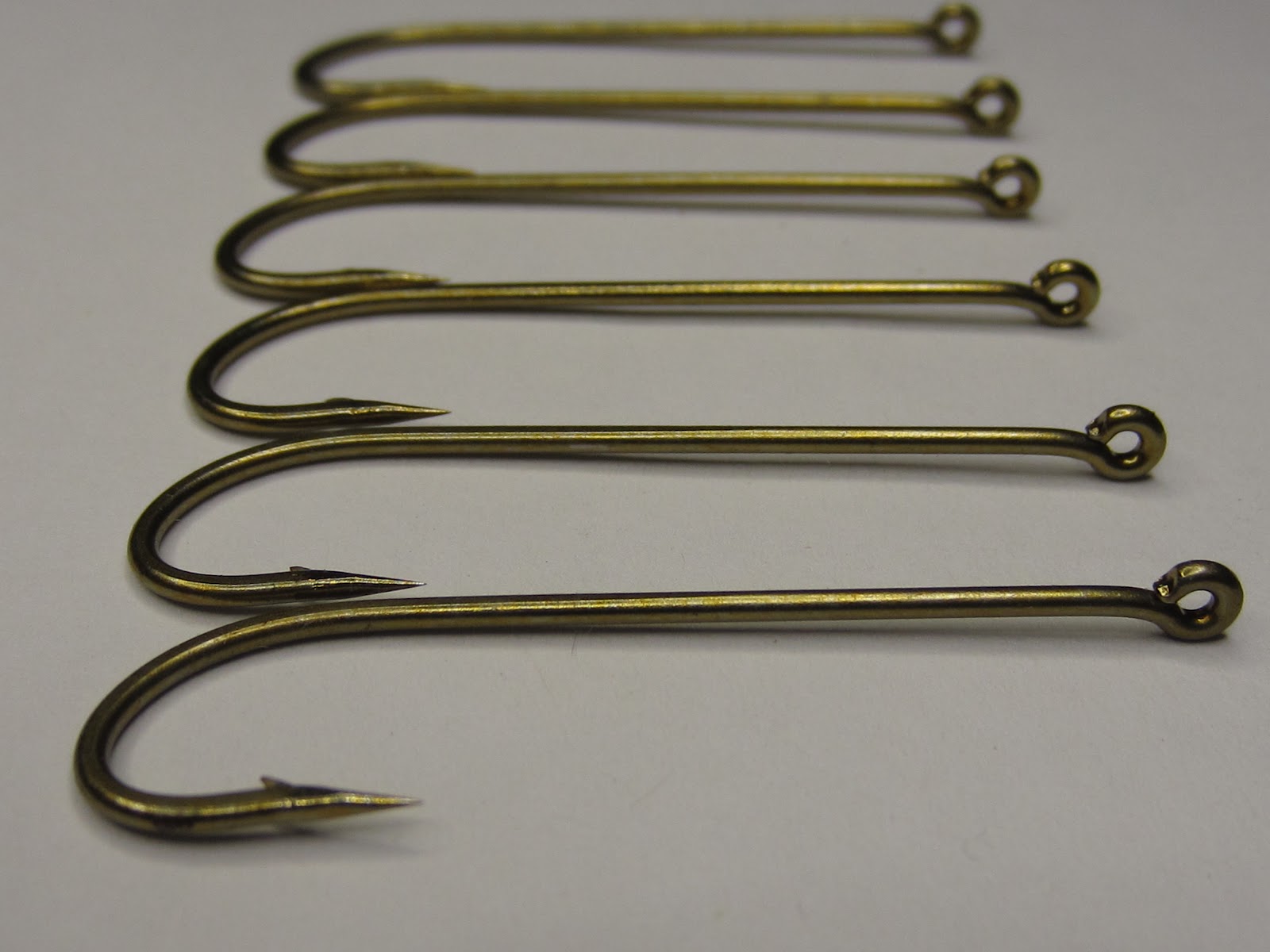
When it comes to fishing with streamer patterns like a Sculpin, it is best to chose a strong hook. I find the more durable my streamers are, the more fish I can catch on each one.
Click here to buy Streamer Hooks


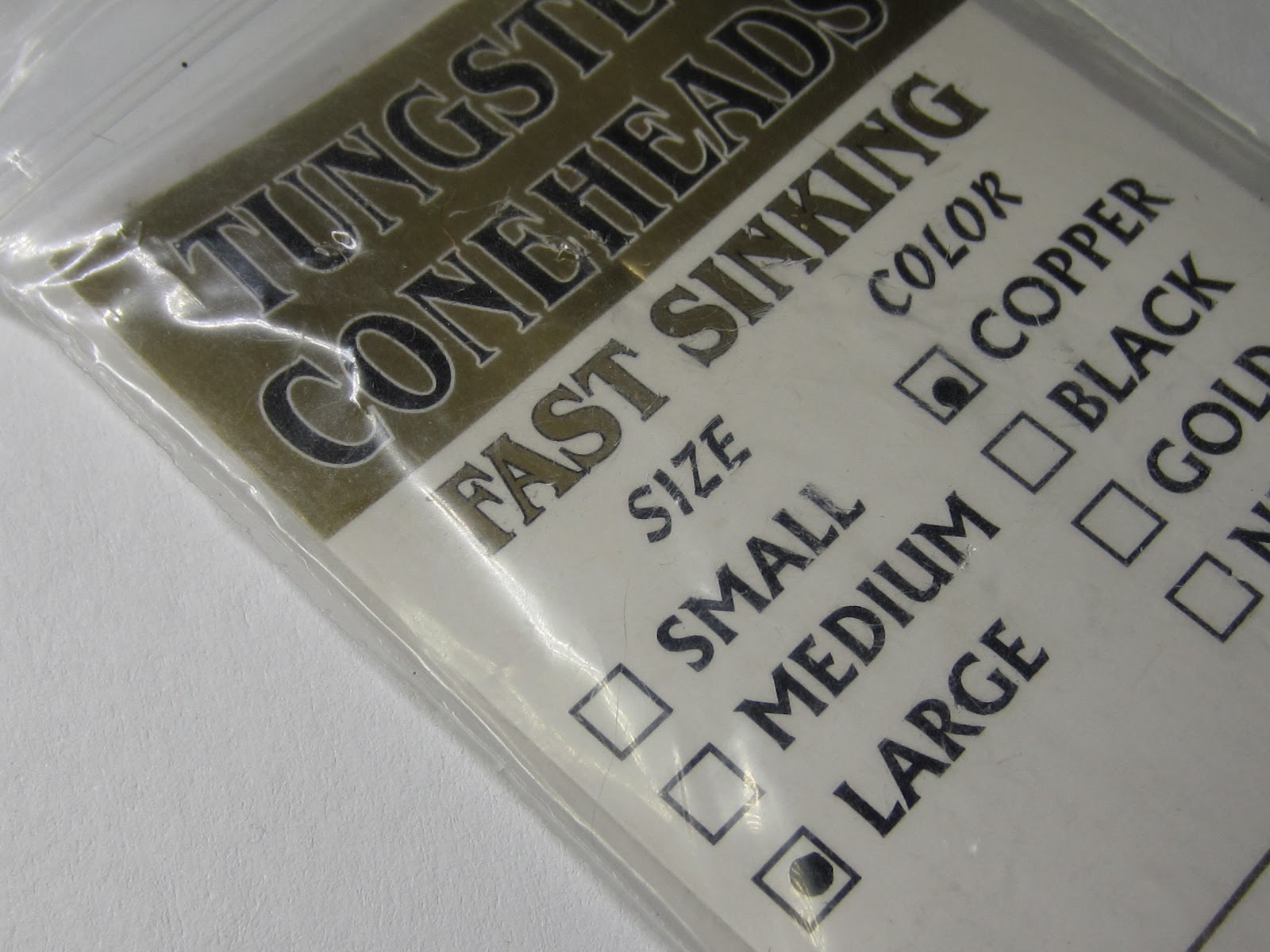
For this streamer pattern I chose a copper colored cone head.
Click here to buy Copper Cone Heads


In addition to the weighted head of this fly I added Lead wire for extra weight.
Click here to buy Lead Wire


It is important to use very strong thread when tying streamers like this one.
Click here to buy strong Fly Tying Thread


The belly of this Sculpin Pattern is tied with chenille.  I prefer using chenille with a bit of orange or an orange hue.
Click here to buy Chenille


The tail and body of this fly are tied with natural rabbit strips. I like to use generally natural or dark colored rabbit when I tie Sculpin Flies.
Click here to buy Natural Rabbit Strips


Finally, the Head and Collar of this Cone Head Sculpin are tied with spun elk hair. I have used deer and they still bite it, go figure!
Click here to buy Elk Hair


~ Click on any image to enlarge ~

Step By Step: How to tie a Cone Head Sculpin

Start a streamer hook with a cone, lead wire and strong thread.

 First, tie in  a strip of natural rabbit fur.  make sure that the front of the strip extends close to the eye of the hook.


Add chenille for the belly of the fly.


After pulling the rabbit strip forward over the chenille, spin a clump of elk hair at the collar of the fly, just behind the cone.


Trim the elk hair to shape the head of the fly. Be sure to leave some elk hair tips out the sides of the head of the fly to help imitate the large pectoral fins of a Sculpin.


A view of the underside of this

Cone Head Sculpin Fly


Fly fishing with sculpin minnow imitations is one of the many ways to catch big trout in Colorado. The best fishing in the state is around Aspen on the Roaring Fork, Frying Pan, and Colorado Rivers.  If you would like a guided fishing trip in the Aspen area, go to http://www.aspenflyfishing.com and book a top fishing guide.


How to tie a
Cone Head Sculpin


How to tie an Egg Sucking Leech Fly


I am not quite sure if Egg Sucking Leeches actually occur in the wild, but I am positive that fish love to eat them. This killer Streamer Pattern works well on rivers like the Big Horn, the Missouri and the Colorado.  I like to fish with Egg Sucking Leeches in the Spring and Fall when the water is cold and the trout are active. I have tied this streamer fly with purple, black, olive and brown.

Click here to learn a little more about Leeches.


Watch how to tie this fly:


~ Click on any image to enlarge ~

Materials List:

Streamer Patterns thi good have to be tied on good strong streamer hooks.  For this fly I chose to use a straight eye, size #4 streamer hook.  Most long shank streamer hooks will work.
Click here to buy Streamer Hooks


I also used Lead Wire to add weight to my Egg Sucking Leech.
Click here to buy Lead Wire


I like to tie big flies like this one with strong thread so that I can secure my materials and use the fly for fish after fish.


The rib of this fly is tied with copper wire.
Click here to buy Copper Wire


 ~ Click on any image to enlarge ~

Step By Step: How to tie an Egg Sucking Leech


Start a hook with lead wire.  Be sure to use a little less to make room for the egg later.
Use strong thread and wind it back to the top of the bend of the hook.
Add a clump of marabou for the tail.
Tie in a stretch of copper wire for the rib.
Now add a length of chenille for the body.
Next, tie in two dark hackles, tips first.
Wrap the chenille forward 2/3 of the way to the eye and tie it off.
Wrap the hackles over the chenille and tie them off at the same point.
Now counter wrap the copper wire over the hackle to the front of the hook.
Add a clump of egg material.
Trim the egg material to the shape of an egg.
Whip finish to complete the fly, it should look something like this.
Here is a top view.

Egg Sucking Leech


Capt Matt is a fly fishing guide in the Roaring Fork Valley out of Aspen, CO.  The streamer fishing in the Spring and Fall on the rivers here is out of this world. If you would like to take a guided float and watch all kinds of fish eat your streamers, set up a trip by going to http://www.aspenflyfishing.com


"How to tie an
Egg Sucking Leech"

How to tie an Olive Wooly Bugger


The Wooly Bugger is perhaps the most popular streamer pattern. Wooly Bugger Flies are a great imitations of nervous bait fish and swimming nymphs. This particular Olive Wooly Bugger Fly is tied with lead wire to make it sink faster.  Personally, my favorite fish to cast a Wooly Bugger at is carp.

Click here to learn a little more about Wooly Buggers


 Watch how to tie this fly:


 ~ Click on any image to enlarge ~

Materials List:

For all of my Wooly Buggers I make sure to use strong hooks.  For this particular fly I chose to use a straight eye, size #2 streamer hook.  Wooly Buggers are most often tied in sizes #8, #6, #4, #2.
Click here to buy Wooly Bugger Hooks


In this fly tying video demonstration, I used Lead Wire to weight the fly.  I have tied Wooly Buggers with and without weight, and the trout still bite.


Using strong thread for all of your streamer patterns is very important.  This streamer is going to take quite a bit of abuse.  I suggest Danville's Waxed FlyMaster Plus.


I used Copper wire for the rib of this fly. Using a copper rib is essential for the durability of this fly.


For the tail of this Wooly Bugger I chose to use Barred Olive Marabou.  This fly can also be tied with simple Olive Marabou or any other color the grabs you for that matter.


The body of this popular streamer is tied with an olive pattern chenille.  This is another part of this fly where you can use many different colors.


The hackle of this Olive Wooly Bugger is tied with Olive Chicken Feathers.  I like to use strung feathers and schlappen for my streamer hackles.
Click here to buy Olive Streamer Hackles


 ~ Click on any image to enlarge ~


 Step By Step: How to tie an Olive Wooly Bugger


Start with a strong hook
Use Lead Wire to add weight to the fly
Begin tying with strong thread  and wrap it back to the top of the bend of the hook
Add a nice clump of marabou for the tail
Tie in a stretch of Copper wire for the rib of the fly
Now tie in a length of chenille
Add two Olive Streamer hackles. Line them up together and then tie them in tips first
Wrap the Chenille Forward
Wrap the Hackles forward
Now counter wrap the Copper Wire up to the eye.  Take some time and pick out the hackle that is trapped under the wire and there you have it!

Olive Wooly Bugger


Streamer fishing is one of the most exciting ways to catch a fish. Olive Wooly Buggers work on bass, carp, all trout and many more species.  If you would like to fly fish in Colorado with streamers, contact Capt Matt Thomas http://riplips.com/coloradopage.html


"How to tie an
Olive Wooly Bugger"