Showing posts with label black. Show all posts

How to tie a Green Drake Nymph

Green Drake Mayflies are often the largest of the mayfly species living in the Western United States. This large Mayfly hatches during months June, July and August in the Colorado Rockies.  During the Hatch, Green Drake Nymphs are most active and trout key in on them.  This Bead Head Nymph pattern is easy to tie, and you may want to tie quite a few, I use two at a time!


 Watch how to tie this fly:


~ Click on any image to enlarge ~


 Materials List:

Green Drake Nymphs are very exciting to fish with because the fish bite hard.  I suggest using a strong hook like a Tiemco 3761.


This Green Drake Fly is tied with a small black bead.  I suggest using a Small sized bead that compliments the pattern without being too big


I would use strong thread for this particular nymph pattern.


Green Drake Mayflies are typcically very dark if not black. I use Black Copper Wire for this fly. I suggest using Black Ultra Wire size BR.


The tail of this fly is tied with dyed Black Pheasant Tail.


The collar of this bead head pattern is tied with a few wraps of Peacock Hurl.


Finally, the hackle of this Green Drake Nymph is tied with an Olive Grizzly Saddle Hackle.  I like to use a stout hackle that acts as a weed guard.


~ Click on any image to enlarge ~


Step By Step: How to tie a Green Drake Nymph

Start with a strong hook and a small black bead
Use strong black thread
Tie in a clump of Dyed Black Pheasant Tail, for the tail.
Add a stretch of Black Copper Wire and wrap it forward to the middle of the hook.
Tie in a couple of Peacock Hurls for the collar of the fly.

Finish the this fly with a couple turns of Olive Grizzly Saddle Hackle

Green Drake Nymph


The Green Drake Hatch is a major event on the Roaring Fork River and the Frying Pan River near Aspen, CO.  These mayflies draw the attention of the fish and the fly fishermen. If you wol like to book a great fishing vacation during the Green Drake Hatch in Colorado, go to http://www.aspenflyfishing.com


"How to tie a
Green Drake Nymph"


How to tie an Adult Midge Nymph


Midge Patterns like this Adult Midge Nymph are the best flies to use during a Colorado Winter.  This little bug exists everywhere and trout have to eat them to survive in the icy cold water. This particular midge pattern is tied to imitate a midge that has been washed under.

~ Click here to learn a little more about Midges ~


Watch how to tie this fly:

~ Click on any image to enlarge ~

Materials List:

This Adult Midge Pattern is tied with a size #20 Tiemco 3761. I have used many different hooks for this fly and all of them work.


The body of this fly is strengthened with a tinsel rib.  I suppose you can use any color that you like for the rib of this fly, however the wire you use must be x-small or fine.


The head of this fly is tied with a small amount of black dubbing. I have used a few other dark colors without giving up strikes.


 I happened to use this mylar braid product for the wing of the fly in this video.  I have used many other forms of flash for the with of this Adult Midge Nymph with great success.


~ Click on any image to enlarge ~


Step by Step Instructions: How to tie an Adult Midge Nymph


Start a small hook with black thread
Add a stretch of fine gold tinsel
Wrap the thread back to the top of the bend over the tinsel.  You may want to build up the body with one or two extra passes up and down the shank of the hook with the thread.
Now counter wrap the tinsel forward over the thread body
Tie in a wing with flash or some other white material
Finish the fly with a small amount of dubbing and a whip finish.

Adult Midge Nymph


Adult Midge Nymphs work very well on the Roaring Fork River in the Winter and early Spring months. If you would like to get out and do some incredible fly fishing, even in the Winter, go to http://www.aspenflyfishing.com


"How to tie an
Adult Midge Nymph"


How to tie a Chartreuse and Black Pike Fly


Esox Lucious, a Latin name that well describes one of my favorite toothy fish to catch. Big pike are incredible sport on fly, and because of the savage nature of this fish, pike flies have to be tied well. I like to use this Black and Chartreuse Pike Fly in stained or muddy water.

(Click here and learn a little about Northern Pike)


Hand Printed Long Sleeve 
Fishing Shirts For Sale, $25


Watch how to tie this fly:


RipLips.com


Materials List:
~Click on any image to enlarge~
 
A good hook is very important when it comes to catching big pike with flies.  I prefer a hook with a large gap, but I have had success with regular streamer hooks and saltwater hooks as well.


This particular Pike Fly Pattern is tied with chartreuse grizzly hackle.  I like to use feathers from a whole rooster neck, but strung saddle hackles work also.


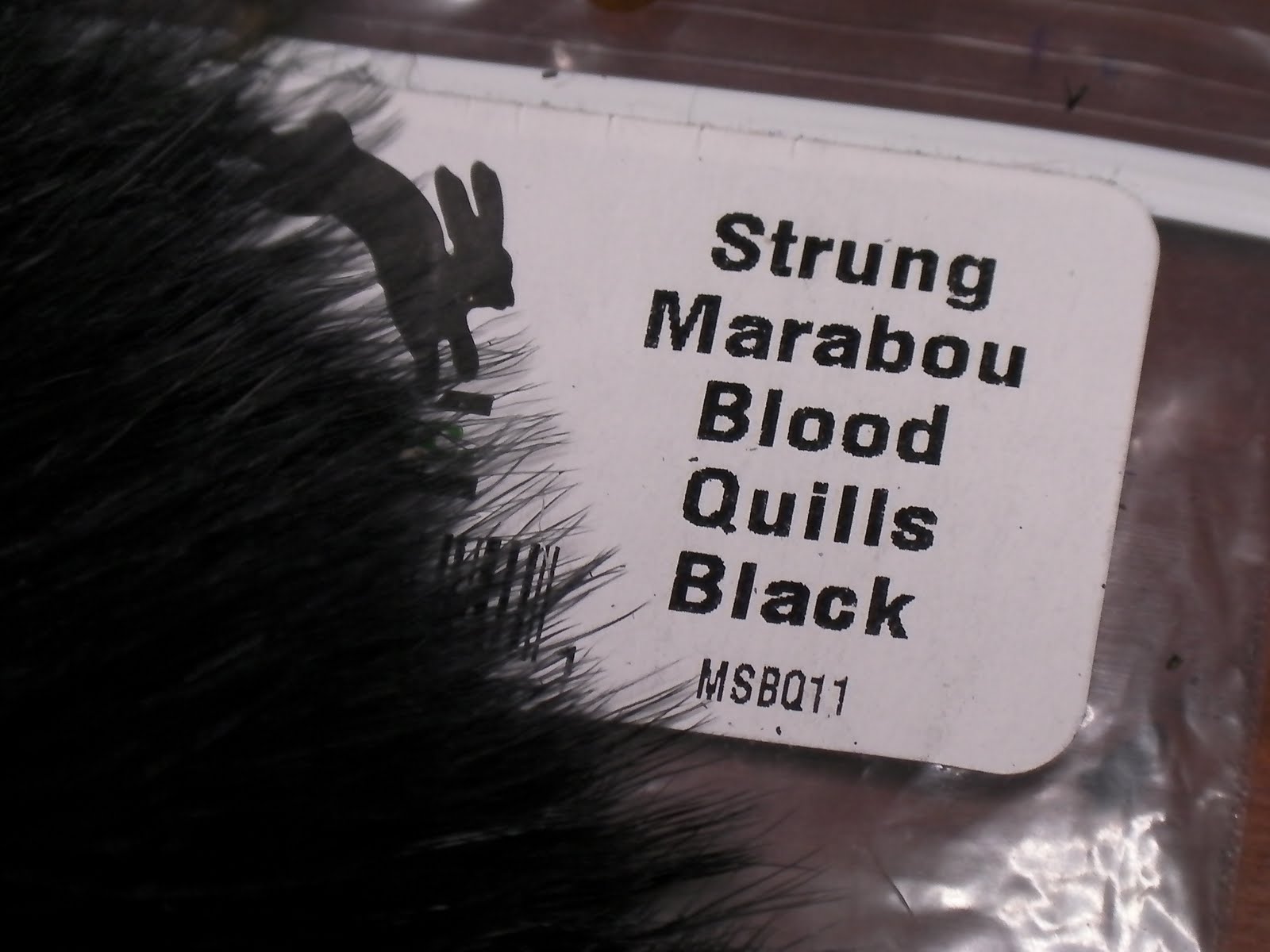
 The collar of this long pike fly is tied with black marabou.


~Click on any image to enlarge~

Step by Step: How to tie a Pike Fly


Start a strong hook with
a big gap.


Tie in the tail of the fly
(6-8 feathers)


Now tie in a clump of marabou
for the collar


Add another clump of marabou,
whip finish and complete the fly.

Chartreuse and Black Pike Fly


 Capt Matt Guides for Trout and Carp on the rivers near Aspen, CO.  Please go to http://www.aspenflyfishing.com  Guiding year round, the fishing is great whenever you get here!


"How to tie a
Chartreuse and Black Pike Fly"
by Capt. Matt Thomas


How to tie a Black Death Tarpon Toad

The Black Death Tarpon Toad is one of my favorite Back Country Tarpon Flies, mostly because it is big, black and red, and tarpon eat it up. I have caught fish on this pattern in the channels, in the flats, and in the flow. Fly fishing for tarpon is one of the most exciting fishing experiences and having enough of the right fly is invaluable. A well tied Black Death Tarpon Toad is certainly one of the best tarpon flies to have in your collection.

Click here to learn a little more about Tarpon


Watch how to tie this Tarpon Fly:


~Click on any image to enlarge~

Materials List:

I use Gamakatsu SL12S #1/0 for every giant tarpon fly I tie. This hook is very good at hooking and keeping an upper lip without bending out.


For this particular Tarpon Toad Pattern, I chose to use bead chain eyes. I usually use size medium or large when I choose to weight my toad flies.


The Black Death Pattern calls for a combination of red and black. I used red rabbit strips for the tail.


This fly also calls for a marabou collar. You may need all sorts of colors of marabou for the tarpon toads you can tie.


Finally, the head of this fly is tied with EP Fibers. There are many colors, so choose wisely...


Super Glue is a must for a saltwater fly tyer.  I typically use the super glue that is on sale.


~Click on any image to enlarge~

Step By Step: How to tie a Black Death Tarpon Toad


Start a hook


Add a rabbit strip for the tail
and tie it up so that it does not
wrap around the hook
(snarfle guard)


Tie in a marabou collar


Now add body segments


Tie in bead chain eyes and
whip finish the fly


Trim the body


Lock it down with glue and
complete the fly


Black Death Tarpon Toad


 Migrating Tarpon are one of the greatest challenges a fly fisherman can face. Giant fish, tiny hook. If you have the need to catch a monster fish with a fly rod, go to http://www.riplips.com/florida and book a tarpon fishing charter in the Florida Keys.


"How to tie a
Black Death Tarpon Toad"
by Capt. Matt Thomas